How to Choose the Right Shot Peening Equipment for Your Needs?
Choosing the right Shot Peening Equipment is crucial for many industries. John Smith, an expert in surface treatment technology, once said, “The wrong equipment can lead to costly mistakes.” It highlights the significance of selecting the right tools for your specific needs.
Shot peening enhances fatigue resistance and prolongs the lifespan of components. However, the variety of equipment can be overwhelming. Different machines serve various purposes, from manual systems to automated solutions. Each type has its unique features, costs, and benefits, which may confuse many users.
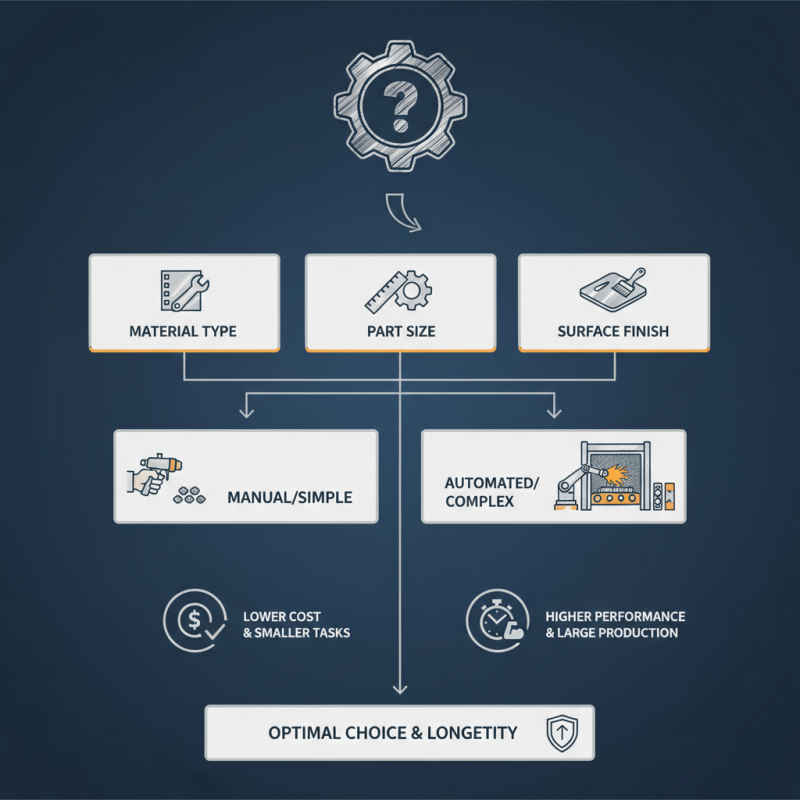
Understanding your needs is essential. Consider factors like the material type, size of the parts, and desired surface finish. Sometimes, a more complex machine isn’t the best choice. A simpler model may suffice for smaller tasks. Balancing performance and budget can lead to better long-term results.
Factors to Consider When Selecting Shot Peening Equipment
Choosing the right shot peening equipment requires careful consideration of several factors. One critical aspect is the
type of media used. Common media include
steel shots, glass beads, and
ceramic beads. Each type has different properties, impacting the
effectiveness and finish of the peening process. According to a study from the
Surface Engineering Association, steel shots are the most widely used, accounting for over 70% of the market.
Another factor is the size and shape of the shot. Larger shots can induce deeper compressive stress but may also cause
surface damage. Conversely, smaller shots provide a finer finish but might
not achieve desired stress levels. As noted in a report by the International Journal of Manufacturing, choosing the wrong
shot size can lead to inefficiencies, as nearly 15% of production time can be lost
in adjusting processes due to suboptimal equipment.
Equipment capacity and versatility are also important. If your production demands fluctuate, consider equipment that can adapt
easily to different media types. A survey conducted by the Fabricators and Manufacturers Association revealed that
40% of facilities struggle with equipment that lacks flexibility.
Ensuring that the equipment meets your future needs can prevent costly upgrades later. Balance the capabilities with your
operational goals to avoid wasted resources.
Understanding Different Types of Shot Peening Technologies
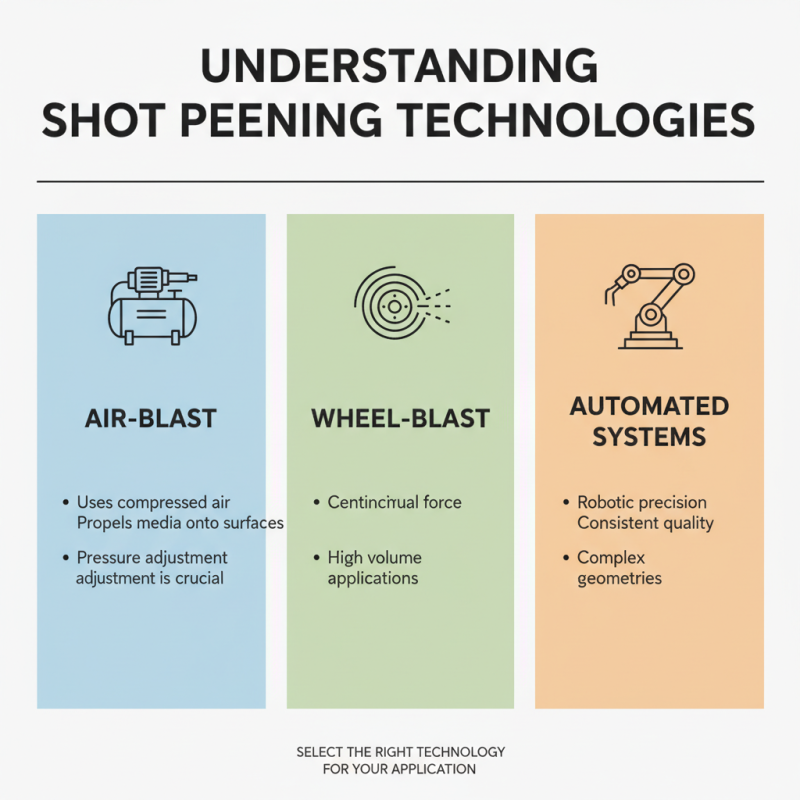
When selecting shot peening technology, understanding the various types is crucial. There are different methods available, each suited for specific applications. The most common types include air-blast, wheel-blast, and automated systems. Air-blast equipment is straightforward and effective. It uses compressed air to propel media onto surfaces. However, adjusting the pressure can be tricky. A slight miscalculation can affect the shot peening quality.
Wheel-blast systems offer a different approach. They are efficient and can handle larger volumes of parts. Using spinning wheels, they project steel shots with precision. Yet, they can be more complex to set up. Additional considerations, like maintenance, are essential. Automated systems provide consistency and reduce labor. But they require a larger initial investment. It’s important to evaluate your budget and volume needs.
Evaluating these technologies involves weighing the pros and cons. Each method has unique strengths and weaknesses. What suits one project may not fit another. A thorough assessment of your specific requirements will yield better results. Are you considering the type of material being treated? Are there cost constraints? Reflect on these aspects to guide your decision effectively.
Evaluating Shot Peening Equipment Based on Material Types
When selecting shot peening equipment, the material type is crucial. Different materials respond uniquely to shot peening, which affects the choice of equipment. Steel components may require a different approach than aluminum or titanium parts. Each material has varying hardness, ductility, and surface requirements. Understanding these properties can prevent costly errors.
For instance, steel, known for its durability, can handle aggressive peening without compromising its structure. In contrast, softer materials like aluminum need a gentler touch. Otherwise, one risks deforming the surface or introducing unwanted stress. An incorrect adjustment can lead to inconsistencies in the finish.
Additionally, machine size plays a role. Larger components may need specialized equipment to ensure uniform treatment. Smaller pieces, however, may benefit from compact, versatile machines. It’s easy to overlook the specifics when making a choice. Reflecting on past experiences with different materials can guide future decisions. Remember, not every approach works for every material type. Find what suits your needs best.
Analyzing Production Volume Requirements for Shot Peening Processes
When selecting shot peening equipment, production volume plays a crucial role.
High-volume operations may require larger, automated machines. These machines enhance efficiency but have higher upfront costs.
Conversely, for smaller production needs, tabletop or portable models could suffice.
These models are often easier to set up and maintain.
Understanding production goals helps streamline the decision-making process.
The intended output can affect the type of machine you choose.
For example, if you anticipate fluctuating demands, flexible equipment options may be necessary.
It’s important to consider whether the machine can adapt to varying batch sizes.
Some users overlook this adaptability, leading to unforeseen downtime.
Capacity also impacts the longevity of your equipment. Inadequate machines might struggle under high workloads, creating bottlenecks.
Investing in the right equipment is crucial.
However, be cautious of over-investing in features you may not need.
It's vital to strike a balance between capability and cost-effectiveness.
Lastly, continuous assessment of your production needs is necessary.
This practice will help ensure your equipment remains aligned with evolving demands.
Cost-Effectiveness and Maintenance Considerations in Equipment Selection
When selecting shot peening equipment, cost-effectiveness is crucial. Higher initial costs do not always equal better performance. Consider the total cost of ownership. This includes maintenance, operation, and potential downtime. A cheaper machine may need more frequent repairs. Those hidden costs can quickly add up.
Tips: Research the long-term efficiency of various models. Talk to existing users. Their experiences can reveal what’s truly worth the investment.
Maintenance is another key factor. Regular upkeep keeps your equipment running smoothly. Look into machines that are user-friendly in maintenance. Complex systems can result in costly service calls. Consider ease of access to parts. A machine that is difficult to maintain could lead to frustration.
Tips: Set a maintenance schedule in advance. This can prevent unexpected issues down the line. Proper maintenance can extend equipment life. Always keep spare parts handy. This simple step can save time and money.
How to Choose the Right Shot Peening Equipment for Your Needs?
| Equipment Type |
Cost ($) |
Maintenance Frequency (Months) |
Effectiveness Rating (1-10) |
Best Use Case |
| Gravity Feed Peening Machine |
2,500 |
12 |
7 |
Small to medium parts |
| Centrifugal Shot Peening Machine |
15,000 |
6 |
9 |
High-volume production |
| Portable Shot Peening System |
9,500 |
8 |
8 |
On-site peening of large components |
| Automatic Shot Peening Machine |
25,000 |
3 |
10 |
Complex and high precision parts |
| Batch Shot Peening System |
5,000 |
10 |
6 |
Batch processing of smaller parts |