Leave Your Message

What Is the Best Hanger Shot Blasting Machine in 2026?

Choosing the best Hanger Shot Blasting Machine in 2026 starts with the parts you need to clean, not a brochure’s biggest number. A machine built for compact castings may struggle with long, heavy components or uneven loads. In real production, part size, hanger capacity, blast coverage, and cycle time all affect the finish. A missed surface can mean extra handling.

Look closely at the wheel arrangement, chamber dimensions, hanger rotation, and abrasive recovery system. Ask how the machine handles different shapes and whether operators can access wear parts without lengthy downtime. Capacity matters. So does consistency. A polished sample part is useful, but it cannot show every production challenge. Details matter.

No single Hanger Shot Blasting Machine is best for every factory. The right choice depends on throughput targets, component mix, available floor space, and maintenance resources. Compare quoted output with realistic loading and unloading times. Check what the control system records, what routine service involves, and how replacement parts are supplied. If possible, inspect a machine running parts similar to yours. A demonstration can reveal noise, dust control, loading effort, and finish uniformity—details that specifications may not capture.

Price deserves scrutiny, but the lowest purchase cost may not deliver the lowest operating cost. Estimate abrasive use, energy demand, labor, and expected maintenance using your own production data. Some figures will remain uncertain. State those assumptions rather than treating them as facts. This guide explains the features and trade-offs that help buyers make a practical, evidence-based comparison in 2026.

What Is the Best Hanger Shot Blasting Machine in 2026?

Define Hanger Shot Blasting as Batch Processing for Suspended Workpieces

What Is the Best Hanger Shot Blasting Machine in 2026?

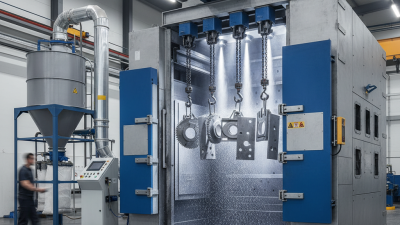
Hanger shot blasting is batch processing for workpieces suspended from a rotating hook or overhead conveyor. Parts travel through a blast chamber while impellers propel abrasive at their surfaces. The method suits castings, fabricated frames, and other components that are awkward to tumble. A practical setup gives each part space to expose edges, recesses, and welds. Crowded loads can shadow surfaces. That detail is easy to overlook.

For selection, assess the heaviest load, part dimensions, required surface cleanliness, and production rhythm. Check hook capacity, impeller arrangement, abrasive recovery, dust extraction, and access for maintenance.

The NACE IMPACT study, published in 2016, estimated corrosion’s global cost at US$2.5 trillion annually, or 3.4% of global GDP. It also estimated that better corrosion-management practices could save 15–35% of that cost. This is broad corrosion data, not a measured benefit of any one blasting machine; surface preparation is only one part of protection.

Ask suppliers to process representative parts and inspect coverage, not just cycle time. Look for consistent treatment around hang points and inside corners. Keep records of abrasive condition and maintenance intervals. A small trial helps. One limitation remains: suspended parts may swing or shield contact areas, and real production loads rarely match a neat demonstration. Choose the machine around actual parts, handling constraints, and verified results, rather than headline throughput alone.

Size the Machine for Part Dimensions, Load Capacity, and Batch Time

What Is the Best Hanger Shot Blasting Machine in 2026?

Choosing a hanger shot blasting machine starts with the parts, not the machine’s headline capacity. Measure the largest component, including hooks and protruding features, then check the chamber’s usable height, width, and depth. Leave room for parts to rotate without striking the walls or each other. A tight fit can cause uneven coverage. It can also slow loading.

Next, match the rated load to the full hanging assembly: parts, fixtures, and hanger. Confirm how that load is distributed, since a heavy, off-center batch may behave differently from a balanced one. Estimate batch time from loading through unloading, not blasting alone. Include repositioning, door cycles, and routine media checks. A neat calculation can still mislead if real parts need extra handling; allow time for a trial run before setting production targets.

Tips: Sketch the largest load at its widest points, then verify clearance inside the chamber. Compare expected batches per shift with the complete cycle time. Ask for a sample process using representative parts, and check coverage in recessed areas. Small details matter. If part sizes vary, size the machine for the largest regular batch, not an unusual one-off. A little spare capacity helps, though excessive chamber space may waste energy and floor area.

Set Cleanliness Targets: ISO 8501-1 Grades Sa 2½ or Sa 3

What Is the Best Hanger Shot Blasting Machine in 2026?
Set Cleanliness Targets: ISO 8501-1 Grades Sa 2½ or Sa 3

The best hanger shot blasting machine is not defined by throughput alone. Start with the required steel cleanliness grade. ISO 8501-1 Sa 2½ means very thorough blast cleaning; slight staining may remain in small, well-defined areas. Sa 3 requires visually clean steel with a uniform metallic appearance. Choose the grade specified for the coating system and service conditions, rather than aiming higher by habit. More intense cleaning can add cycle time and abrasive use without improving coating performance.

Tips: Keep a reference panel nearby and inspect flat faces, recesses, and weld toes under good light. Rotate parts consistently; hanger shadows can leave missed patches. Remember, Sa grades describe visual cleanliness, not surface profile. Measure the profile separately when coating requirements call for it.

Before selecting a machine, trial representative parts at the intended load and hanger spacing. Record wheel settings, abrasive condition, and exposure time; small changes can shift results. Inspect difficult corners after blasting, not just broad outer faces. Sa 3 may be challenging to achieve evenly on complex components. Visual assessment also involves judgment, so record inspection conditions and discuss uncertain areas with a qualified inspector. A trial run reveals more than an empty-machine specification sheet.

What Is the Best Hanger Shot Blasting Machine in 2026? — Set Cleanliness Targets: ISO 8501-1 Grades Sa 2½ or Sa 3

Selection or Inspection Dimension Sa 2½ — Very Thorough Blast-Cleaning Sa 3 — Blast-Cleaning to Visually Clean Steel Implication for a Hanger Shot Blasting Machine
Visual cleanliness target Surfaces are free from visible oil, grease, dirt, and most mill scale, rust, paint, and foreign matter. Any remaining traces are limited to slight stains appearing as spots or stripes. Surfaces are free from visible oil, grease, dirt, mill scale, rust, paint, and foreign matter, and show a uniform metallic appearance. Specify the required grade for the job and verify the result visually against the applicable ISO 8501-1 reference images.
Typical target choice Often specified where a very thorough blast-cleaned surface is required and the coating system permits the grade. May be specified for projects requiring the highest visual cleanliness grade, subject to the coating specification and project requirements. Choose the target from the coating specification, service environment, and contract documents—not from machine type alone.
Hanger and load configuration Parts must be presented so that the blast stream can reach all required faces and recesses. Consistent exposure is especially important where a uniform metallic appearance is required across the specified surface. Assess part size, shape, weight, hanging points, spacing, and rotation. Shadowed or overlapping surfaces can remain under-cleaned.
Coverage and media impact Coverage must remove unacceptable visible contamination while avoiding unnecessary over-blasting. Coverage must be sufficient to produce the required visually clean, uniform surface. Review blast-wheel arrangement, part movement, media flow, and exposure time as a complete process. Confirm performance with representative parts.
Process settings to control Control the operating conditions that affect coverage and cleaning consistency. Maintain stable conditions and check results across the full load, including difficult-to-reach areas. Record relevant settings such as media condition and flow, wheel operating condition, loading pattern, and cycle time; establish settings through trials.
Acceptance inspection Inspect the prepared surface under suitable lighting and compare it with the applicable standard reference. Confirm that the specified surface has a uniform metallic appearance and no visible contamination. Use a documented inspection plan with defined sampling locations and acceptance criteria. Visual cleanliness is not proof of surface profile or salt removal.
Surface profile ISO 8501-1 visual grades do not specify a numerical surface-profile value. ISO 8501-1 visual grades do not specify a numerical surface-profile value. If profile is important, set a separate requirement and measure it using an appropriate method specified by the project or coating system.
Soluble salts and dust The visual grade alone does not establish that soluble salts or dust meet project limits. The visual grade alone does not establish that soluble salts or dust meet project limits. Specify separate cleanliness tests and limits when required, and complete them before coating in accordance with the project requirements.
Practical machine decision A suitable choice when the required acceptance grade is Sa 2½ and trials demonstrate consistent coverage on the actual parts. A suitable choice when Sa 3 is contractually required and trials demonstrate the specified appearance across the required surfaces. The best machine is the one that meets the required grade repeatably for the actual part mix, while supporting safe loading, inspection, and process control.

Important: ISO 8501-1 grades describe visual surface cleanliness after preparation. They do not, by themselves, specify a blast profile, soluble-salt limit, dust limit, or machine capacity. Confirm all project requirements separately and validate the process on representative parts.

Check Abrasive Quality and Surface Profile Against ISO 11124 and ISO 8503

What Is the Best Hanger Shot Blasting Machine in 2026?

Check Abrasive Quality and Surface Profile Against ISO 11124 and ISO 8503

Choosing a hanger shot blasting machine means checking more than its stated capacity. Ask how it controls abrasive flow, separates broken media, and maintains consistent wheel performance. For metallic abrasives, ISO 11124 provides requirements and classifications to help assess properties such as size and hardness. Request current product documentation, then compare it with the abrasive actually circulating in the machine. Worn or mixed media can produce uneven cleaning and unpredictable surface texture.

Surface profile matters too. ISO 8503 describes methods for assessing the profile of blast-cleaned steel, including comparator-based approaches. Select a method appropriate to the project specification, and record where and how measurements are taken. A profile that is too shallow may weaken coating adhesion; one that is too rough can leave peaks with insufficient coating coverage. Small differences matter.

A tidy test panel can mislead. Test representative parts, including corners and recessed areas, at the intended hanger load and cycle time. Check several points, not just the easiest surface to reach. Keep readings, abrasive batch details, and machine settings together. This makes changes easier to trace, although it will not remove every source of variation. The best machine is one that can repeatedly meet the required cleanliness and profile, with evidence operators can verify.

What Is the Best Hanger Shot Blasting Machine in 2026?

Check abrasive quality and surface profile against ISO 11124 and ISO 8503.

ISO 8503-1 Shot Comparator Profile Bands

The bars show the reference profile ranges for the fine, medium and coarse segments of the ISO 8503-1 shot comparator. These are comparator bands, not guaranteed machine results or universal coating requirements. For a hanger shot blasting machine, verify the metallic abrasive against the applicable ISO 11124 requirements and measure the prepared surface profile against the project specification. ISO standards provide assessment criteria; they do not rank machines.

Compare 2026 Models by Wheel Output, Dust Control, Uptime, and Lifecycle Cost

Choosing the best hanger shot blasting machine in 2026 means comparing more than advertised wheel power. Ask suppliers for abrasive flow in kilograms per minute, usable hook capacity, and cleaning results on parts like yours. A high-output wheel can shorten cycle time, but only if the machine covers complex surfaces evenly. Request a timed trial with representative castings or fabricated parts. Inspect shadowed areas, not just the bright exterior.

Dust control deserves equal scrutiny. Compare extraction airflow, filter area, and how operators check pressure drop during a shift. Look for dust escaping near the loading door, where workpieces enter, and around the abrasive recovery system. Small details matter. A clean floor is not proof of effective capture; ask to review operating measurements and filter-change intervals.

Uptime and lifecycle cost are harder to judge from a brochure. Check access to replaceable liners, wheel blades, seals, and bearings, then ask how long routine service takes. A machine that cleans quickly may still cost more through media use, electricity, filters, and unplanned stops. Request a cost estimate based on expected shifts and part mix. Estimates can be imperfect, especially before a trial, so record the assumptions and compare them against actual production data.