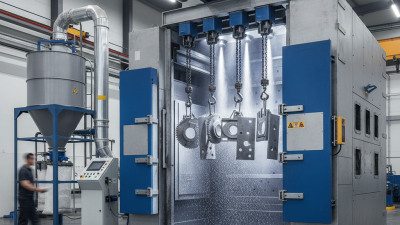
| Machine Type |
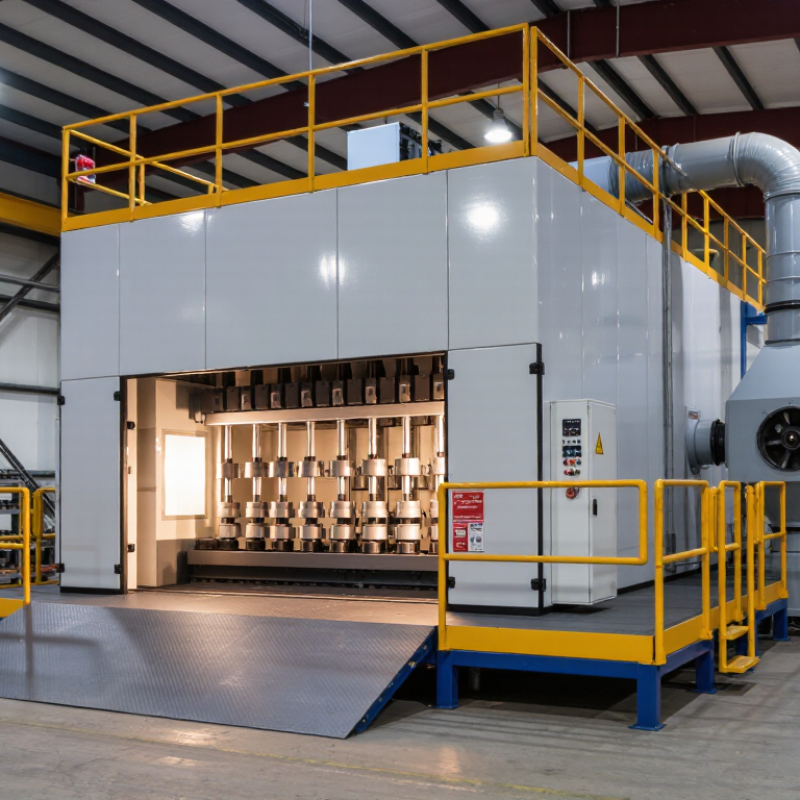
Spinner hanger shot blasting machine with rotating or oscillating hanger |
Improves abrasive coverage on castings, forgings, weldments and fabricated parts |
Confirm whether the machine uses continuous rotation, indexing rotation or an oscillating motion |
| Typical Hanger Load |
Approximately 100–2,000 kg per hanger, depending on configuration |
Load capacity can be adapted to small, medium or heavy components |
Select the rated load with a safety margin above the maximum workpiece weight |
| Shot Blast Wheel Power |
Commonly 7.5–22 kW per wheel for general-purpose equipment |
Higher wheel power supports greater abrasive throughput and productivity |
Match wheel power and abrasive flow to material, surface condition and required finish |
| Abrasive Flow Rate |
Often approximately 100–300 kg/min per blast wheel |
Adjustable abrasive flow helps control cleaning intensity and operating cost |
Request the tested flow range for the selected wheel and abrasive type |
| Blasting Chamber Lining |
Replaceable wear plates, commonly made from high-manganese steel or alloy steel |
Replaceable liners protect the chamber shell from abrasive impact |
Check liner thickness, fastening method and availability of replacement parts |
| Hanger and Hook Design |
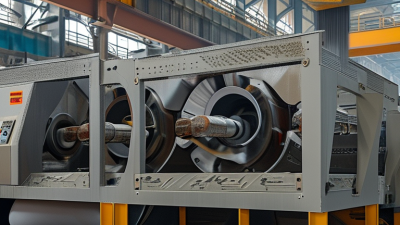
Heavy-duty hook, bearing-supported rotation and optional multi-hook arrangements |
Stable rotation increases exposure of complex workpiece surfaces |
Verify hook diameter, bearing protection, balancing method and maximum envelope size |
| Cycle Time |
Typically about 3–20 minutes per load, depending on part geometry and surface condition |
Programmable blasting and rotation times support repeatable production |
Use sample testing to confirm actual cycle time rather than relying only on catalog data |
| Abrasive Recovery |
Mechanical recovery with screw conveyor, bucket elevator and abrasive separator |
Recycling separates reusable abrasive from dust and oversized debris |
Check separator efficiency, access doors and clean-out points |
| Dust Collection |
Cartridge or bag filter system, sized according to chamber volume and dust load |
Negative-pressure extraction improves visibility and reduces airborne dust |
Confirm airflow, filter area, fan power, cleaning method and local emission requirements |
| Control System |
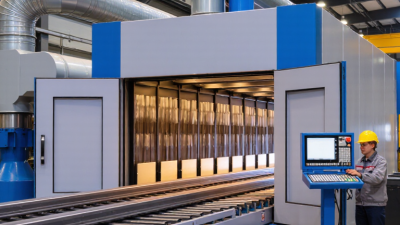
PLC-based sequence control with adjustable blasting, rotation and unloading parameters |
Automated interlocks help coordinate the door, hanger, wheel and dust collector |
Request emergency-stop circuits, fault alarms, recipe storage and remote diagnostics options |
| Safety Protection |
Door interlocks, overload protection, emergency stops and access protection |
Safety circuits prevent blasting or rotation when access doors are open |
Verify conformity with the machinery and workplace safety rules applicable in the destination country |
| Surface Treatment Result |
Removes scale, rust, sand and surface contaminants; exact result depends on abrasive and process settings |
Controlled coverage provides consistent preparation for coating, inspection or machining |
Evaluate sample parts for cleanliness grade, profile, dimensional effect and remaining shadow areas |
| Energy and Maintenance |
Main energy users are the blast wheel, dust collector fan, elevator and drive motors |
Accessible components and standardized wear parts can reduce downtime |
Compare total operating cost, abrasive consumption, filter replacement and maintenance access |
| Customization Capability |
Options may include chamber size, hook layout, wheel quantity, loading method and automation level |
Configurable designs support different workpiece dimensions and production layouts |
Require a dimensional drawing, utility list, foundation data and acceptance-test criteria before ordering |