China has become a major manufacturing base for industrial surface-preparation equipment. Its Sand Blasting Machine producers serve workshops, shipyards, steel fabricators, construction companies, and maintenance contractors worldwide. However, choosing among the top ten manufacturers requires more than comparing catalog prices.
A reliable evaluation should examine blast pressure stability, nozzle durability, abrasive recovery, dust collection, tank capacity, automation, and after-sales support. Product certifications matter too, but paperwork cannot replace practical testing. A machine may look impressive online yet struggle with moisture, uneven abrasive flow, or limited local service. Small details matter. Hose fittings. Filter access. Operator controls.
Surface-preparation consultant John D. Sargent offers a useful principle: “Abrasive blasting is not only about removing a coating; it is about preparing the surface consistently for its next purpose.” This idea guides the manufacturers discussed in this article. The strongest suppliers usually combine engineering experience with clear technical documentation, responsive communication, and stable production quality.
The ranking should not be treated as absolute. Different users need different equipment. A compact pressure cabinet may suit a repair shop, while a continuous automatic line may fit a large factory. Some manufacturers excel at customization, but their delivery times may be longer. Others offer competitive prices, although spare-parts support can require closer checking.
This guide compares ten notable Chinese Sand Blasting Machine manufacturers through practical criteria. It considers equipment range, manufacturing capability, quality control, customization, export experience, and customer support. Some conclusions remain open to debate, because real performance depends heavily on installation, abrasive choice, maintenance, and operator skill.
A sand blasting machine is equipment that cleans, roughens, or prepares a surface by directing abrasive material through a nozzle at controlled pressure. Despite its name, modern systems may use glass beads, steel grit, mineral media, or other approved abrasives instead of ordinary sand. The selected media affects the finish, speed, and surface damage.
A typical machine includes an abrasive tank, air compressor, moisture separator, hose, nozzle, and dust-control system. Compressed air accelerates the abrasive toward metal, stone, or other durable materials. Operators adjust pressure carefully. Excessive pressure can remove too much material, leave uneven marks, or distort thin components. Low pressure may create an inconsistent finish.
Small cabinet machines suit parts that fit inside an enclosed chamber. Larger pressure systems handle structural components and heavier preparation work. In practical workshops, clean, dry air is essential because moisture can block the abrasive flow. Ventilation also matters. Dust must remain controlled.
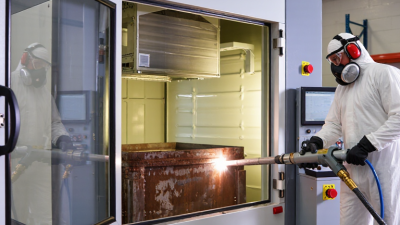
Protective equipment is not optional. Operators need suitable respiratory protection, eye protection, gloves, hearing protection, and enclosed work areas. Local regulations may restrict certain abrasive materials or require specific dust controls. A common mistake is treating blasting as simple spraying. It is a controlled process that depends on media size, nozzle distance, pressure, angle, and surface condition. Even experienced operators may need several trials before achieving a consistent result.
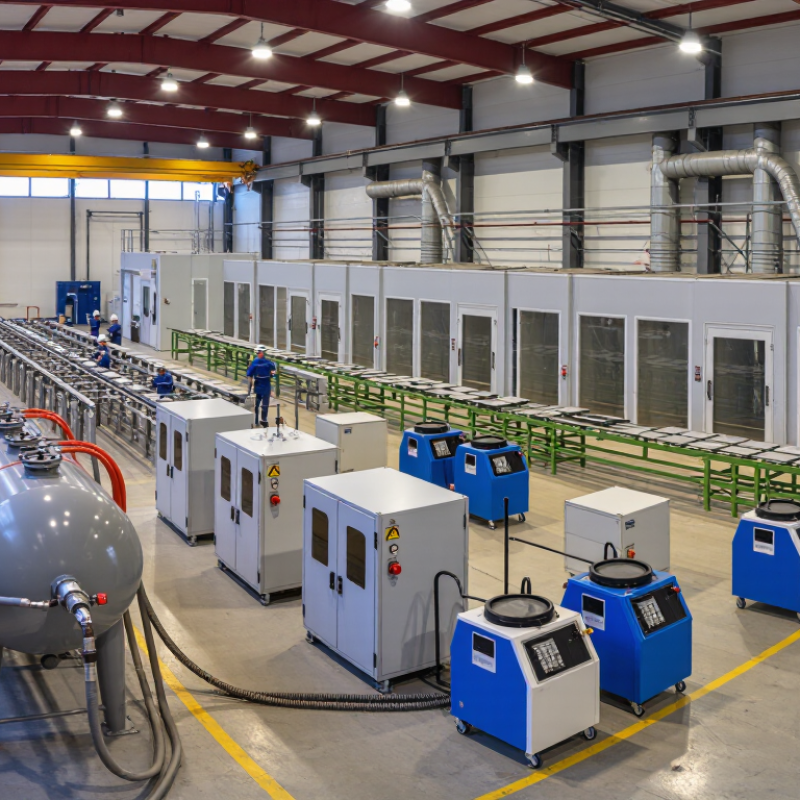
Chinese manufacturers commonly produce pressure blast cabinets, suction blast cabinets, wet blasting machines, and automatic conveyor systems. Each type serves a different production rhythm and surface requirement.
Pressure cabinets deliver abrasive media quickly through a pressurized vessel. They suit heavy rust, weld scale, and thick coatings. Suction cabinets offer gentler control for aluminum parts, molds, and small components. Wet blasting mixes water with abrasive media. It reduces dust and leaves a smoother finish, though drying becomes an important step.
Tumble belt machines handle batches of small castings, fasteners, and hardware. Parts roll inside a rubber-lined chamber, exposing several surfaces in one cycle. Rotary table machines work well for medium-sized components that need fixed positioning.
For large structures, blasting rooms provide working space, recovery systems, and adjustable air pressure.
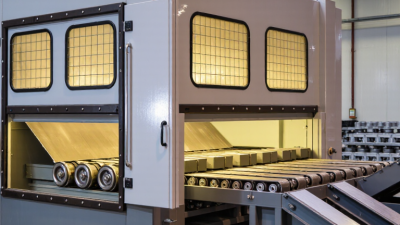
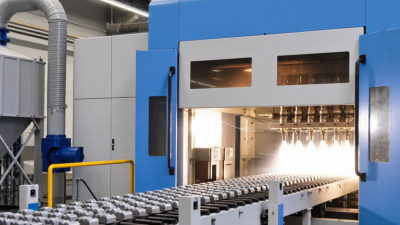
Fully automatic lines may include loading stations, robotic guns, conveyors, and cartridge dust collectors. They improve repeatability, but programming and maintenance require skilled technicians. A low purchase price can hide higher filter, media, or compressed-air costs. That detail deserves attention.
During equipment evaluation, check nozzle wear, chamber lining thickness, airflow stability, and emergency stops. Request test samples using your actual material. A catalog finish may look convincing, yet real production can expose uneven coverage or excessive media use. Good suppliers should explain these limitations clearly and provide measurable test records.
When evaluating Chinese sand blasting machine manufacturers, start with evidence, not polished websites. A 2024 Grand View Research analysis forecasts steady growth in the global abrasive blasting equipment market through 2030, driven by construction, shipbuilding, and maintenance. That growth attracts capable factories, but also inexperienced assemblers. Request a dated factory audit, staff list, equipment records, and three recent export references. Check whether the workshop performs pressure testing, nozzle inspection, and electrical testing in-house.
Performance must be measurable. Ask each manufacturer to blast the same steel coupon using identical abrasive, pressure, and nozzle size. Record air consumption, surface coverage, dust leakage, and production time. Surface preparation should be checked against ISO 8501-1, while surface profile can be compared with ISO 8503 references or replica tape. A machine that looks powerful may consume excessive compressed air. Expensive lessons happen there.
Review the technical file carefully. It should state vessel capacity, working pressure, abrasive type, hose length, control-valve model, and replacement-part availability. The 2023 World Bank Logistics Performance Index shows that delivery reliability remains a practical supply-chain concern, so confirm packing methods and spare-parts lead times. Ask for video evidence from a live production test. One video is not enough. I would also inspect weld finishing around doors and pipe joints; these small areas often reveal rushed workmanship. A factory may pass paperwork yet miss daily consistency. That possibility deserves attention.
| Evaluation Dimension | Practical Industry Benchmark | Documents or Data to Request | Importance | Warning Signs |
|---|---|---|---|---|
| Pressure Vessel Compliance | The blast pot should have a traceable design, manufacturing, welding, and pressure-test record. The working pressure must be clearly stated on the nameplate and technical documentation. | Pressure-vessel drawings, material certificates, welding records, hydrostatic-test results, nameplate photographs, and applicable conformity documents. | Critical | No permanent nameplate, missing test records, or a working pressure stated only in marketing material. |
| Operating Pressure Range | Common dry abrasive blasting systems are generally specified by working pressure, with many industrial systems operating around 6–8 bar. The selected pressure must match the nozzle, abrasive, and workpiece. | Factory performance sheet showing working pressure, air consumption, recommended nozzle sizes, and tested blasting conditions. | Critical | Only maximum pressure is published, while continuous working pressure and air demand are omitted. |
| Compressed-Air Requirement | Air consumption changes substantially with nozzle diameter and pressure. A supplier should provide a calculation or chart rather than one universal compressor recommendation. | Air-consumption chart in m³/min or CFM, nozzle bore, pressure, compressor recommendation, and allowance for pressure loss. | Critical | The quoted compressor is too small for the proposed nozzle or the supplier cannot provide air-consumption data. |
| Abrasive Compatibility | The machine should identify compatible abrasives, such as steel shot, steel grit, glass bead, aluminum oxide, garnet, or other approved media. Compatibility depends on the metering valve, hose, nozzle, and dust system. | Approved-abrasive list, abrasive-size range, metering-valve specification, and test results using the customer’s intended media. | Critical | The supplier claims universal compatibility without specifying abrasive size, hardness, or feed limitations. |
| Nozzle and Hose Selection | Industrial equipment should specify nozzle material, nozzle bore, hose internal diameter, hose length, and connection type. Tungsten-carbide and boron-carbide nozzles offer different service-life characteristics. | Parts list, nozzle-life guidance, hose pressure rating, connection drawings, and recommended spare-parts schedule. | High | No standardized spare parts, unclear thread or flange dimensions, or undersized blast hose. |
| Dust Collection and Ventilation | Blast cabinets and rooms require suitable ventilation and dust filtration. The collector should be selected according to enclosure volume, leakage control, abrasive type, and required airflow. | Dust-collector airflow, filter area, filtration grade, fan power, pressure-loss data, and replacement-filter specifications. | Critical | A collector is included without airflow data, filter specifications, or a safe method for dust discharge. |
| Operator Safety Features | A suitable system should include emergency stop controls, dead-man control, pressure relief, guarded moving parts, safe access, and clear operating instructions. | Risk assessment, safety-circuit diagram, emergency-stop test procedure, interlock list, operating manual, and maintenance instructions. | Critical | The blast gun continues operating after the control is released or the machine lacks documented safety testing. |
| Surface Preparation Capability | Performance should be described using measurable results, such as cleanliness grade, surface profile, production rate, and abrasive consumption. ISO 8501-1 is commonly used to describe visual cleanliness of steel surfaces. | Before-and-after samples, test reports, surface-profile measurements, production-rate data, and the exact abrasive and pressure used. | Critical | The supplier promises a cleanliness grade without defining the substrate, abrasive, pressure, or inspection method. |
| Manufacturing Quality Control | Consistent quality requires documented incoming inspection, weld inspection, dimensional control, leak testing, electrical testing, and final functional testing. | Quality-control plan, inspection checklist, weld-quality records, serial-number traceability, factory acceptance-test report, and calibration certificates. | High | The supplier provides only general quality claims and cannot show a completed inspection record for the quoted configuration. |
| After-Sales Support and Total Cost | Evaluation should include spare-parts availability, response time, warranty terms, commissioning, training, packaging, shipping, installation, energy use, abrasive consumption, and routine maintenance. | Warranty document, spare-parts price list, service contacts, maintenance schedule, training plan, packing specification, and total-cost quotation. | High | A low purchase price is offset by unavailable wear parts, unclear warranty exclusions, or no technical support after delivery. |

Use this evidence-based scorecard when comparing ten shortlisted Chinese suppliers. Technical values should be confirmed against the final machine configuration, applicable local regulations, and the supplier’s signed quotation.
China’s Top 10 Sand Blasting Machine Manufacturers are gaining attention as global demand grows for surface preparation, corrosion control, and industrial cleaning. Grand View Research estimated the global abrasive blasting equipment market at about USD 2.3 billion in 2023, with steady growth expected through 2030. China’s large steel, machinery, shipbuilding, and construction sectors support this expansion.
A practical top-10 review should examine more than factory size. Production experience matters. Buyers should check nozzle wear tests, dust-collection efficiency, pressure stability, and spare-part availability. Machines with poorly sealed cabinets can release fine abrasive dust around the operator’s feet. That detail matters.
Mordor Intelligence projects continued growth in industrial blasting equipment, driven by infrastructure maintenance and manufacturing activity. Chinese manufacturers often provide cabinet systems, pressure vessels, automatic blasting lines, and customized recovery units. The stronger suppliers usually show documented testing records, clear material specifications, and traceable quality procedures. ISO 9001 certification can support reliability, but it cannot replace independent inspection. Data varies.
Energy use also deserves closer attention. A machine using a smaller compressor may reduce operating costs, yet lower air volume can extend cleaning time. Buyers should compare output per hour, abrasive recovery rate, filter replacement cycles, and noise levels under real production conditions. Some published specifications appear optimistic. On-site testing remains the safer reference.
Choosing a sand blasting machine from China requires more than comparing catalog prices. Define the workpiece size, surface condition, abrasive type, and daily production volume. A small cabinet may suit brackets, while large steel frames need room, recovery, and stronger ventilation. Ask for working pressure, nozzle material, air consumption, and blast coverage. These figures reveal whether your existing compressor can handle the machine.
Dust control deserves close attention. Check the collector’s filtration method, airflow, noise level, and filter replacement cost. Request videos of similar machines operating under realistic conditions. Factory testing should include leakage checks, electrical safety, pressure stability, and abrasive recovery. Independent inspection can confirm the reported results. It costs more, but prevents expensive surprises.
Do not judge equipment by the machine body alone. Review the control system, emergency stop, lighting, spare parts, manuals, and operator training. Confirm voltage, plug standards, packing dimensions, and responsibility for transport damage. Clear drawings reduce installation errors. One overlooked detail can delay production.
A low quote may hide weak seals or limited after-sales support. Even experienced buyers misjudge total cost. Compare energy use, consumables, maintenance time, shipping, and replacement parts. Ask for a written warranty with specific response times. Keep every technical promise in the contract, not in a casual message. That discipline improves reliability when the first problem appears.